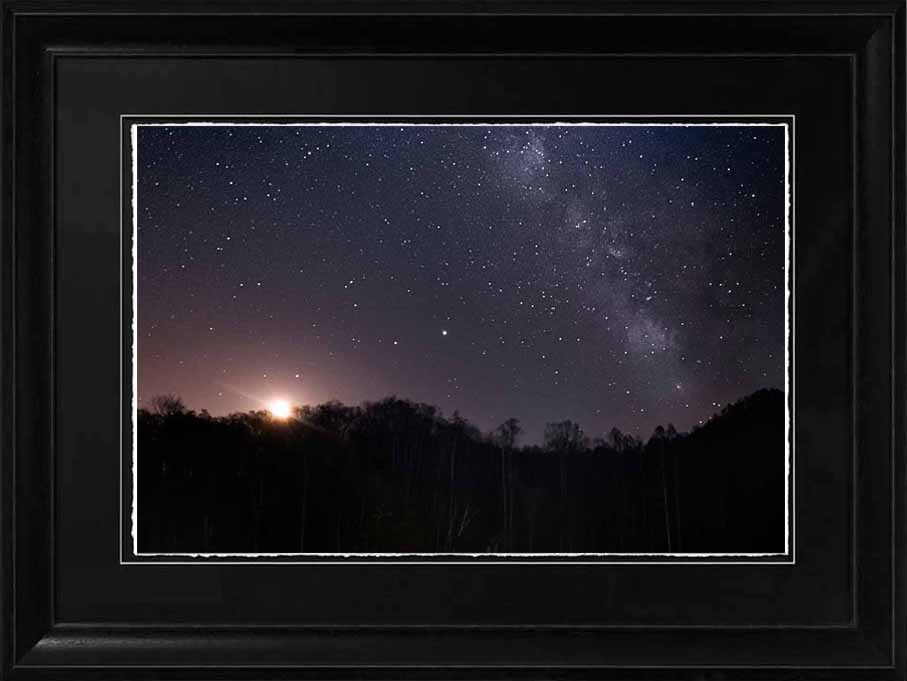
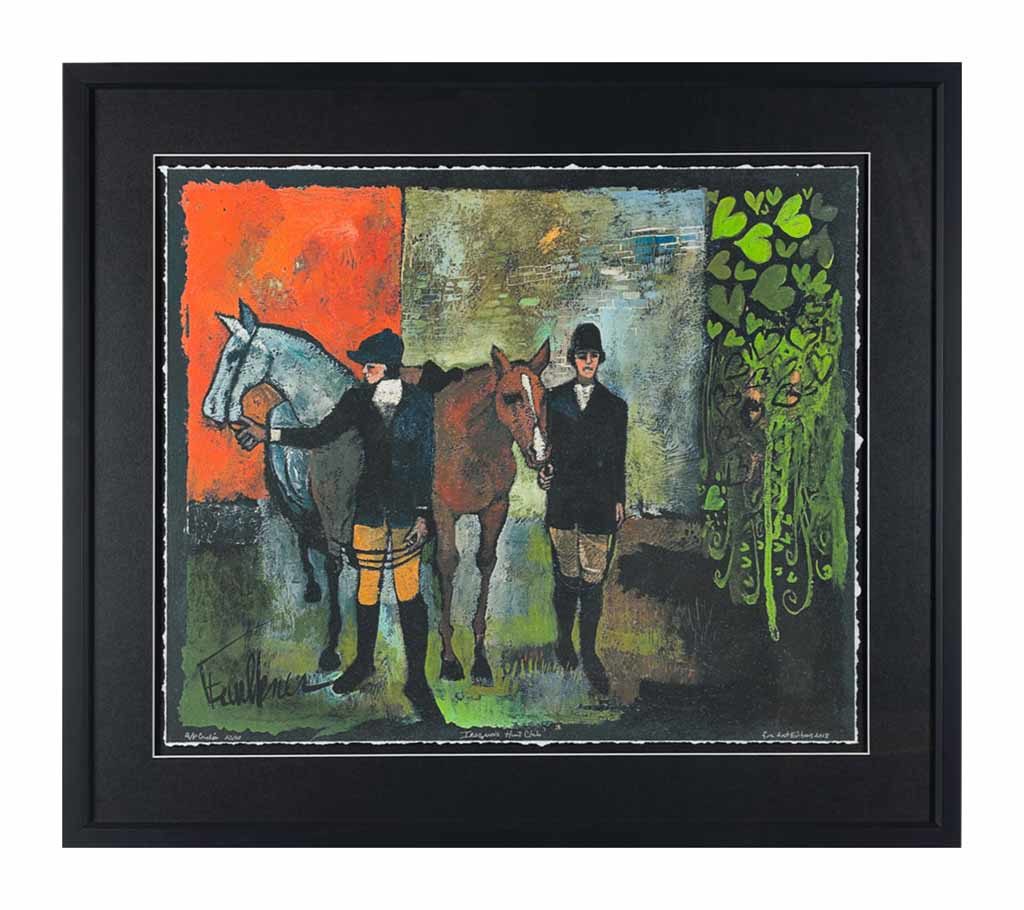
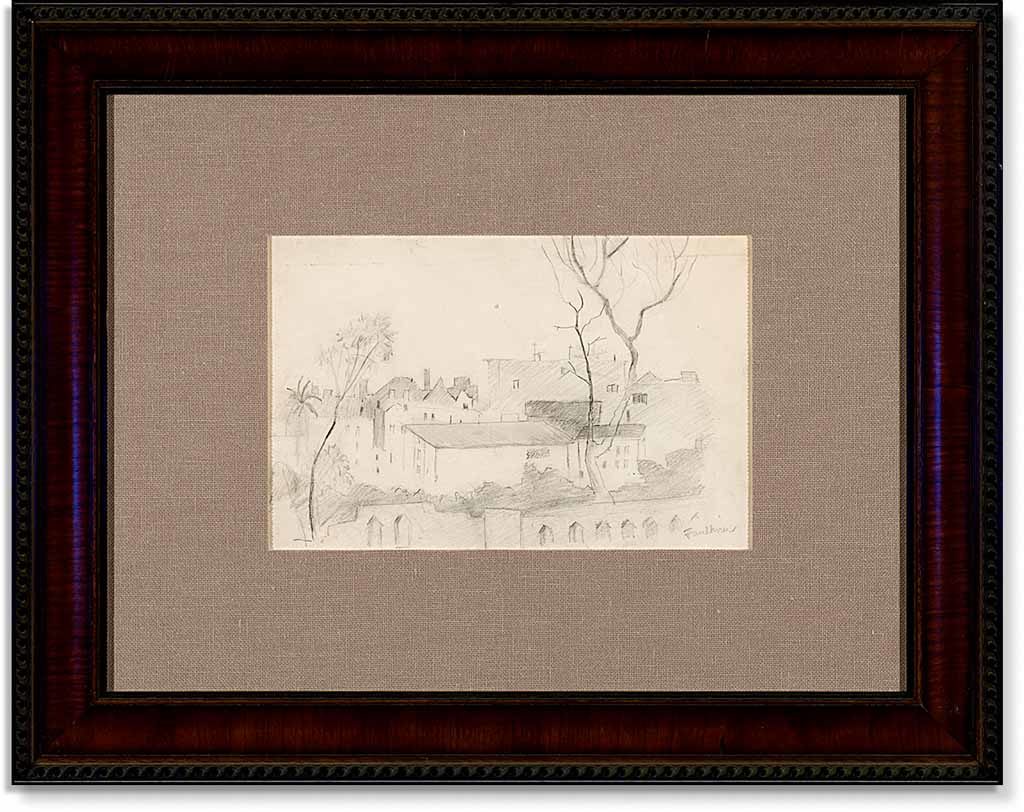
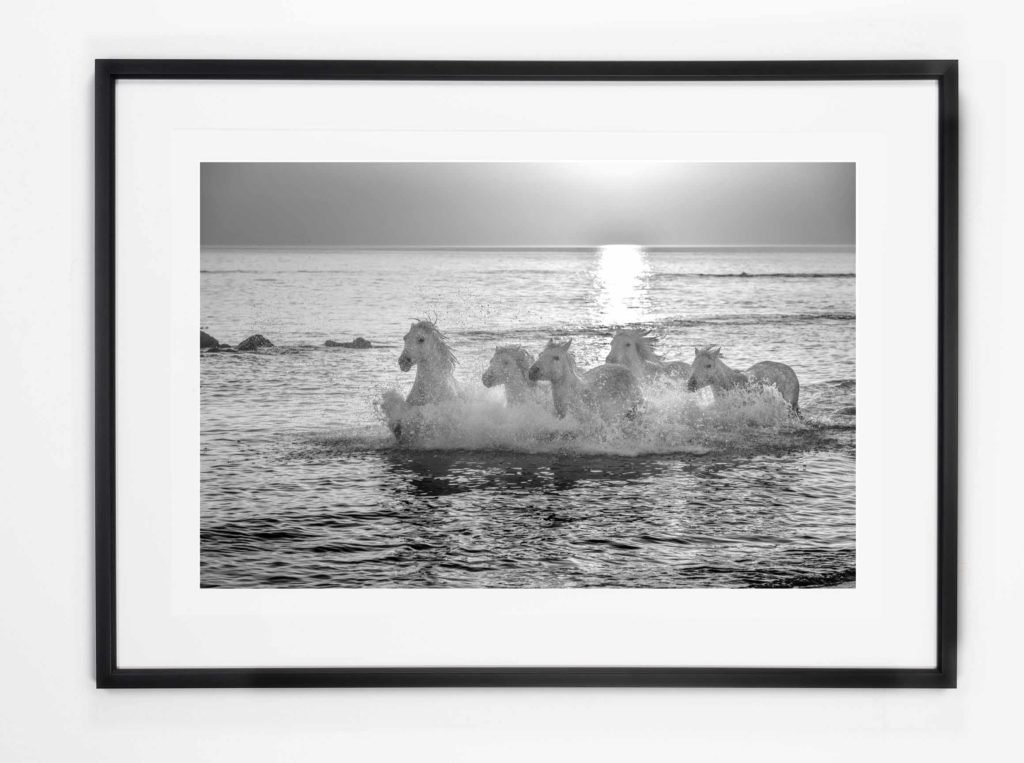
Click images above to purchase art
© Fine Art Editions 2006
JOHN STEPHEN HOCKENSMITH
Born in 1954 in Cynthiana, Kentucky, John Stephen Hockensmith studied art and photography at Georgetown College in Kentucky. He began his career in 1975, working for the Commonwealth of Kentucky as a photographer. After gaining training and experience from state government, Hockensmith started an independent photography business in 1979 in Georgetown, opening a studio and art gallery.
Throughout the 1980s, he pursued fine arts and exhibited paintings, sculptures and photographs. In 1986, he had his first one-man exhibit of paintings at the Headley-Whitney Museum in Lexington, Kentucky.
Beginning in 1994, Hockensmith focused his artistic career on equine themes. From the mid-1990s to the present, he has published, exhibited and distributed fine equine art throughout the United States and in other countries around the world. Since 2000, he has been contracted by Churchill Downs to produce the official Kentucky Derby Winner's Print and Winner's Collection.
In 2004, Hockensmith’s one-man exhibition at the International Museum of the Horse at the Kentucky Horse Park, called Rare Breeds: from Figurative to Abstract, generated international critical acclaim. In 2006, he has completed another major exhibition for the International Museum of the Horse on Gypsy horses and the Appleby Horse Fair. This exhibit was accompanied by his first book, Gypsy Horses and the Travelers' Way, a showcase of his photography, prose and poetry inspired by his travels with Romani Gypsies across northern England.
Hockensmith's commercial clients include Toyota of North America, Toyota Kentucky, Lexmark, Universal Studios and the Office of the Governor of Kentucky.
PORTRAIT OF THE ARTIST — AND HIS HORSES
Portrait of John S. Hockensmith in 1978: He’s prowling the streets of Mt. Sterling, Kentucky, about an hour from his Georgetown home base, during the annual Court Days festival. He’s got a 35mm Nikon with him, and he’s looking for black-and-whites of ragamuffin kids who are scruffy enough and dressed-down enough to seem like they’re from another era. He’s hoping the illusion of the past in the present will be of compelling interest to anyone who might eventually take in his growing Court Days portfolio.
Along the way, he’s making comic shots of a poet pal clandestinely sharing illicit cigarettes with juvenile delinquents on a parked railroad boxcar. And he’s looking for (and finding) men in old-fashioned top hats with shotguns over their shoulders in the odd crowd.
Not three people in a hundred can probably tell you how or when Court Days originated. But Hockensmith can. Later in the day his poet buddy takes him to the festival’s original site, where Hockensmith gets some good pictures of hounds being sold and traded—a theme he’ll come back to 15 or so years later.
Portrait of John S. Hockensmith in the mid-1980s: He’s been worn down by people who have not accepted his photographs as art, despite his ongoing efforts to put "artistic" content into the imagery:
Aaron Siskind-style photos of walls with painterly markings and verbal graffiti and no other context;
pretty women dressed as angels in the sheerest, sexiest fabrics, with silly homemade wings attached to their shoulder blades; women in rooms with antique props, such as water pitchers and basins and dressing tables with ornately framed mirrors, so as to look like the subjects of 19th century French Impressionist paintings;
a repetitive large-scale photo-series of what appears to be gestural brushstrokes, hand- colored in various tints and composed so they can be hung in different configurations for various spatial effects.
Next, ca. 1984 through about 1994: Hockensmith has taken up painting because of the lack of acceptance of his photographs. He’s forsaken his beloved medium, reluctantly, and thrown himself completely into the making of his own paints, the stretching of huge canvases that will show the public his serious intentions, and an independent study of contemporary masters and current golden boys, including Cy Twombly, Joseph Beuys, Jasper Johns, Jean Michel Basquiat and Keith Haring.
He is also taking cues as a painter from Lexington artist and friend, Henry Faulkner (now deceased), who invited Hockensmith to exhibit with him on a Hyatt Regency mezzanine in downtown Lexington. Hockensmith had taken some photographs of the painter which Faulkner liked, hence the invitation to put some of them in Faulkner’s exhibit of paintings. Some of those photos would appear in Faulkner’s biography published by the University of Tennessee Press.
In 1986, Hockensmith scores a show at the Headley-Whitney Museum, on the outskirts of Lexington. The museum has hired a new curator who wants to scuttle (or expand) the decorative arts agenda and get some fine art into the place. Hockensmith is one of the beneficiaries of this new outlook, and he feels he is on the right track as an artist, though he knows he’s not setting the world on fire the way he wants to.
Portrait of John S. Hockensmith in 2004: He has spent the last ten years photographing horses and fox hunts, and he’s getting ready to open a major exhibition of his equestrian work at the Kentucky Horse Park. He’s negotiating with Belle Meade Plantation in Nashville about showing some of the work there after the Horse Park exhibition ends.
He’s been traveling the country to scout out rare breeds, at the invitation of folks who raise these marvelous creatures. He’s kept up with innovations and new technologies in photography and graphics and printing, with which he is so well acquainted that he’s free to concentrate largely on how to get whatever picture he wants to get. And he’s feeling free enough to take a lot of chances—chances that are obviously paying off.
He’s as happy with this body of work as he’s ever been with any body of work he’s ever done, and what he’s saying can be paraphrased in this way:
Too many "horse artists" pay such attention to the horse that they miss the art. They paint or draw (usually in standard pastels) images of animals that are so detailed and anatomically correct they ought to go into manuals for veterinary autopsies. Or they stick to tried and true "traditional" images, so tame and hackneyed that they aren’t worth making. Even painters who make a distinction between "sporting art" and "equine art" sometimes miss the horse in favor of capturing the sport at hand.
Hockensmith is learning how to go them all one better. And he’s doing it using the medium he’s always preferred: photography. But it’s photography with a twist. The art is made using a camera. It doesn’t matter what kind of camera, if the photographer knows all the tricks, as Hockensmith certainly does, and has a trained eye.
But somewhere along the path to where he is now, Hockensmith discovered Giclée printing. What attracted him to the Giclée process is the effect of the finished image. When photographs are put through the Giclée process, the end-result is something that looks sort of like a photograph but might also be something other than a photograph. This is what Hockensmith had been striving for in the darkroom for years. But he couldn’t do it with "traditional" chemicals and photo papers.
More importantly, Hockensmith feels that what he is doing now is true art inherently: "What makes me different from other ‘horse artists’ is I spent 20 years studying and making abstract art," he says. "I spent years making photographs that weren’t supposed to look like photographs." [And that’s a direct quotation, not a paraphrase.]
That experience plays well in the color images the International Museum of the Horse will be displaying at the Horse Park.
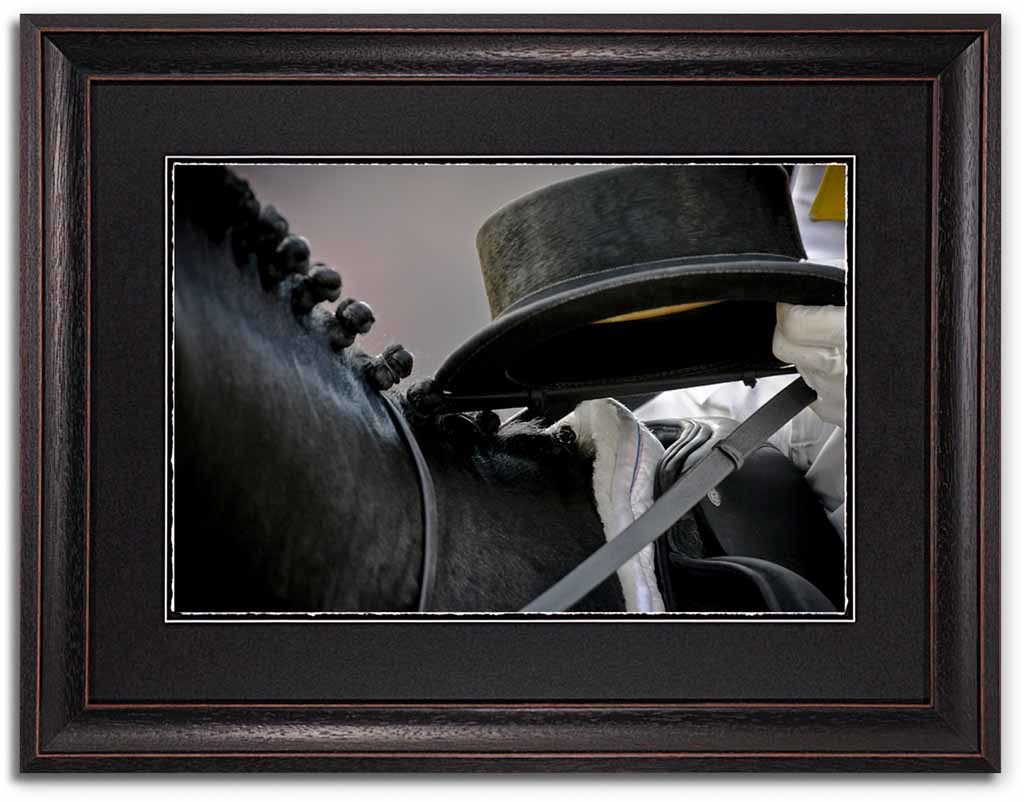
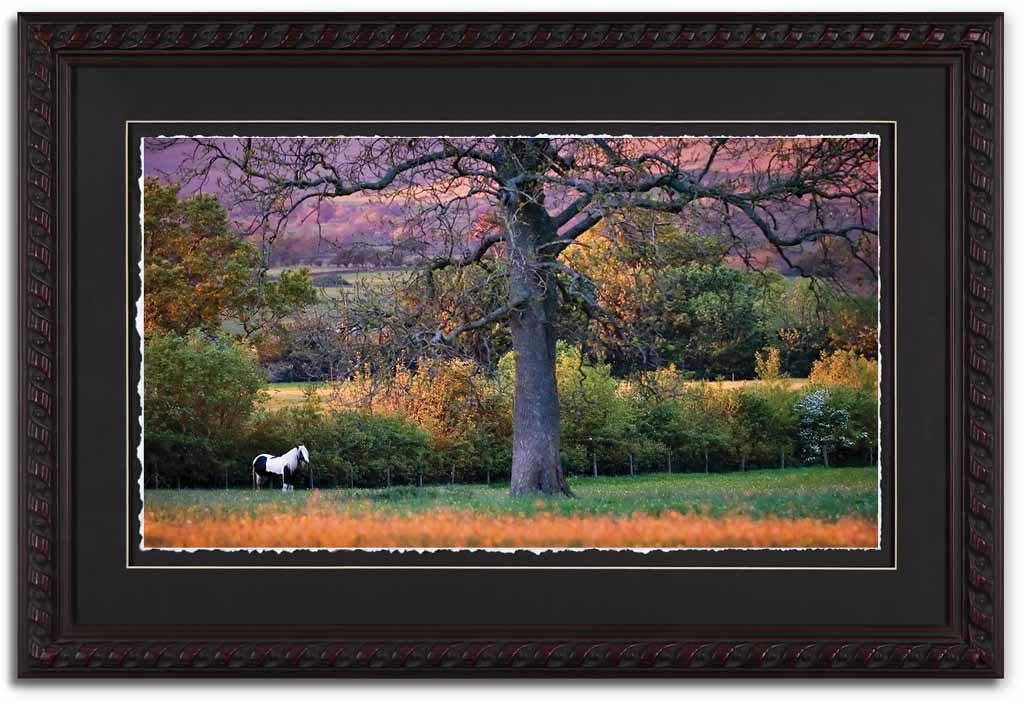
Hockensmith zooms in on parts of the horse, fragments them like a modernist would have, with surrounding foliage or skies bounding forward as if solid or receding into colored dimensions beyond Nature. He knows to look for jagged light areas playing against each other—like dry-brushed or scumbled areas from famous old Clyfford Still paintings. He lets the motion of the animals in fields or on tracks work its magic on the camera shutter and lenses, yielding controlled blurs, streaking and clashing colors, and startling contrasts.
With all that said, Hockensmith wants to make it perfectly clear that he does not overly manipulate his photographs digitally and he does not use the Giclée process to alter them significantly (which one can do with Giclée). He may crop images around the edges or fool with them in that way once he sees a contact sheet or makes a proof. But, essentially, what you see in his images is what he got through a viewfinder and how he changed the camera settings to get the tones and lights and darks the way he wanted them in any given picture.
To beat all, there is this fact: "I’m the guy who said 20 years ago a horse would never find its way into any piece of art I made," Hockensmith says now, with a laugh.
He attributes that attitude to two of his college-level art teachers, who both came out of the tradition of abstract expressionist painting and came from other parts of the country. They landed in Kentucky and told all their students that painting barns and horses and landscapes was not a good or noble thing to do; it was a used-up subject and nobody could do it well. Even if a student exhibited the potential to become an Andrew Wyeth, they thought the time was irrevocably past for that kind of subject.
"I also looked around me and saw, firsthand, all kinds of terrible artists making terrible paintings of barns and horses. I didn’t seeing anybody doing it well, so I thought, ‘I don’t want to be one of them.’"
But, years later, he came to a realization: "The horse is what makes Central Kentucky, and some other areas in the country and in the world, distinct from most other places," Hockensmith says. "This is horse country. We are the horse capital of the world. That’s really true. There might be rare breeds elsewhere that we don’t have, but we’ve got a lot of the world horse industry centered right here where we are. People move here from all over the world because this is a center, to work here and live here. And they know people all over the world, so that makes us connected directly to the rest of the world. But the center is here.
"I think that may be what makes some artists not want to use the horse in art. They see horses all over the place around here; they're commonplace, and artists don't want to work with commonplaces.
"But there is no reason for artists here to shy away from the horse as a subject. All you’ve got to do is do it better than anybody else. Or different than everybody else. Or at least carve out your own niche in it. It’s a very versatile subject. More versatile than I ever imagined before I got into it. But now I’m beginning to see that, at age 50, there’s more than enough in horses to keep me busy for the rest of my life."
Discovering a muse in your own backyard is a rare happenstance for any artist, yet John S. Hockensmith has finally succumbed to the subject with which he never expected to achieve such personal artistic satisfaction. As an artist, Hockensmith is of an age where his early influences were the abstract expressionists like Franz Kline or Clyfford Still. The pictorial was shunned in favor of the emotions evoked by textured paint and clashing colors. Certainly, Mr. Hockensmith’s photographs still evoke those masterful painters, especially in such works as Equites Study #010 or Post Modern. A mature artist though molds those early influences into his own personal vision. Perhaps the best art comes from the things you see around you every day, the experiences you gain as you live your life, or the visions you yearn to share with your fellow man. And this photographer lives deep in the heart of Horse Country--the Bluegrass Region--Georgetown, Kentucky, where he has begun a journey to share with the world the beauty of this area’s greatest resource, the horse.
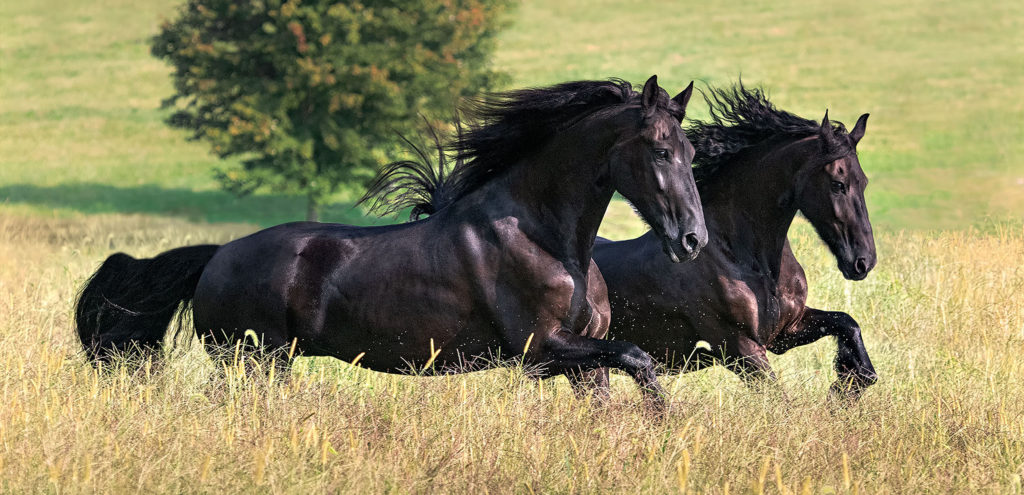
John S. Hockensmith is proud to announce that this subject matter has garnered him a one-man show at the International Museum of the Horse at the Kentucky Horse Park. This show is Hockensmith’s version of a two-dimensional Noah’s Ark. He not only desires to share his vision of the horse, but to instigate a desire on the part of the viewer to preserve the vanishing breeds of horse that used to populate the world. The Thoroughbred and Saddlebred are still abundant in the United States and they are well represented in Hockensmith’s art. But what about the Dales Pony who Hockensmith captures literally flying two inches off the ground in his photographic canvas titled, Unbridled 015? Or the mythical-appearing Fell Pony in the photograph, The Fell Stallion, charging across the sand as if he, too, is about to fly? How often does the general public see the grace and beauty of these disappearing breeds? Thanks to John S. Hockensmith, the viewer can witness the beauty of these magnificent equines in one show.
In fact, the photographer is about to embark on a trip to England to attend the famous Appleby Horse Fair along with the owners of Gypsy Vanners and Shire horses that have appeared in some of Hockensmith’s best works. This trip should produce another round of extraordinary photographs that will illustrate to the viewer a lifestyle based on horses that is so rare in the United States. The Gypsy Vanner, the Fell Pony, and the Shire are all British breeds that excel at pulling-whether a Gypsy caravan or a pony cart or a newly felled tree. But, of course, these creatures are on the verge of extinction unless people are inspired to support the breeders who loyally maintain studbooks and the various equestrian sports that can utilize the talents of these breeds.
After September, 2004, the exhibition at the International Museum of the Horse will travel to Shizunai, Japan, the sister-city of Lexington, Kentucky. There is no doubt that there are Oriental breeds of horse that Hockensmith will seek to add to his pictorial “Ark,” but his goal for this trip is mainly to share the beauty of these horses that we cannot afford to lose. The show then returns to Tennessee, at the Belle Meade Plantation, where Thoroughbreds were raised back in the day when that breed was rare.
William Faulkner said, “The aim of every artist is to arrest motion, which is life, by artificial means and hold it fixed so that a hundred years later, when a stranger looks at it, it moves again since it is life.” Hockensmith easily accomplishes this aim; he is at the top of his skills with digital photography. His mastery of the tools allows him to reproduce the vision in his mind-to capture pieces of light with a computer then spray it with jets of ink into our three dimensional world. According to Henry Ward Beecher, “every artist dips his brush in his own soul, and paints his own nature into his pictures.” Without a doubt, Mr. Hockensmith’s horses reflect an inner peace reached after many years of experience meshed with an endless abundance of energy. These figures are either bursting from the canvas, straight at the viewer, or pensively staring into a misty distance. His art is further enhanced by his integrity, which means that Limited Editions are truly limited making each image even more collectable.
Like anybody in Kentucky making a living from equines, John S. Hockensmith desires to leave a legacy of horses for the next generation. As the show tours from the International Museum of the Horse, to the horse center of Japan, Shizunai, then on to Belle Meade Plantation, he will have obtained his own version of the Triple Crown.
VISUAL FESTIVAL OF COLORFUL GYPSY CULTURE TO BEGIN AT THE KENTUCKY HORSE PARK
-- Rare views of a vibrant but hidden world and the horses at its center --
LEXINGTON, KY. – A breakthrough photographic exhibition taking visitors on a vivid ride through the magical world of the Romani Gypsies of England and the bold pinto horses they cherish will open June 17 and extend through September 10 at the Kentucky Horse Park’s International Museum of the Horse.
Photographer John S. Hockensmith joined a prominent Gypsy family in 2004 and 2005 for the Gypsies’ annual pilgrimage to Appleby Fair, a gathering both boisterous and spiritual that is rooted in more than 300 years of history. Along the 60-mile, horse-drawn journey through the picturesque villages and misty moors of northern England, Hockensmith captured luminous landscapes, pensive portraits and intimate details of a culture seldom seen by those who are not Gypsies.
The striking Gypsy horses, which are rapidly gaining in popularity through recent exports to North America and elsewhere, are a primary spoke in the wheel of Romani life and thus are the heart of the exhibition, which is titled Gypsy Horses and the Travelers’ Way. Hockensmith’s images reveal the sweat of their toil while pulling the Gypsies’ brightly painted living wagons, the kindness of their natures as they gently carry children on their bare backs, and the raw beauty and power of their flowing strides across lush pastures.
“I’ve never been drawn into a subject quite like this,” said Hockensmith, whose equine photography has gained world renown. “The experience was beyond the bounds of my imagination. It’s no exaggeration to say that it was life changing as I lived with the Gypsies and their horses, experiencing both their strengths and the challenges of their lives as seen through the prism of their view that happiness lies in the here and now. The awesome strength yet kind gentleness of these horses, which are typically marked in bold black and white patterns and are adorned with luxurious manes and feather, is unforgettable.
“It’s so very appropriate to debut this exhibition at the International Museum of the Horse,” he continued. “The Romani Gypsies and their horses are history that’s alive and breathing and still unfolding before our eyes in a way that few people have been able to truly see.”
The exhibition at the International Museum of the Horse will feature more than 100 photographs selected from the more than 275 published in Gypsy Horses and the Travelers’ Way, a 184-page book recounting the story of Hockensmith’s travels with the Gypsies which will be released to bookstores in early June. Other images exclusive to the exhibit also will be included. Hockensmith will make special appearances at the museum throughout the exhibition and will welcome Gordon Boswell, a Romani Gypsy historian, poet and musician whom he met on the road to Appleby Fair, as a special museum guest during mid-June. In addition, several Gypsy horses will be exhibited at the Horse Park from June 15-18 and a living wagon adorned with the unique brightly painted artwork of the Gypsy culture will be on display.
“Mr. Hockensmith … got it absolutely right—on all levels,” Boswell said. “His camera has captured the magical moments of our beloved Gypsy horses and all the fine detail in the complex fabric of Romani life.”
“John Stephen Hockensmith’s incredible images of his remarkable journeys to Appleby Fair with the British Romani provide a rare and insightful look at a mysterious and often persecuted culture and the horses that they treasure,” said Bill Cooke, director of the International Museum of the Horse.
The art galleries at the museum have hosted a number of internationally significant exhibitions, including Imperial China, the first exhibition ever to explore the role of horses through more than 3,000 years of Chinese history and culture, and All the Queen’s Horses, an exclusive collection celebrating the role of horses in British history. The galleries are open from 9 a.m. until noon and 1 p.m. until 4 p.m. daily. Admission to the Kentucky Horse Park includes admission to the museum.
John S. Hockensmith is the owner of a photographic studio and art gallery in Georgetown, Ky. His exhibit Rare Breeds, which featured artistic images of some of the world’s most unusual horses, was displayed by the International Museum of the Horse in 2004. To view Mr. Hockensmith’s work, including an array of his Gypsy horse images, visit www.finearteditions.net.
For more information on the Gypsy Horses and the Travelers’ Way exhibition or the accompanying book, call 1-800-972-8385.
GYPSY HORSES AND THE TRAVELERS’ WAY
A VIVID RIDE THROUGH A VIBRANT BUT HIDDEN WORLD
GEORGETOWN, KY. – From tales told by the light of stick fires to the drumbeat of hooves across foggy moors, the new book Gypsy Horses and the Travelers’ Way unveils the mystery and magic embraced by the Romani Gypsies of northern England. Through stunning images, lyrical prose and moving poetry, renowned equine photographer John S. Hockensmith invites readers on a unique journey across cultural boundaries to celebrate the centuries-old rituals of horse trading and spiritual renewal at Appleby Fair.
Hockensmith gained rare entree into this secluded world when he was invited to join a prominent Gypsy family in 2004 and 2005 during the annual horse-drawn pilgrimage over sixty miles through picturesque villages, along busy modern highways and into verdant pastures where time seems to have stopped. When Hockensmith and readers reach Appleby Fair—a boisterous gathering that first took place more than 300 years ago—they have shared a penetrating insight into a way of life that has been much misunderstood but is cherished by the Gypsies with the same fierce pride they maintain for their colorful horses.
These striking Gypsy steeds earn first billing in the oversize, 184-page book by virtue of their historical role in this nomadic lifestyle as well as their chiseled beauty and gentle natures. Hockensmith’s lavish photos depict the horses, which are gaining great popularity through recent exportation to North America and elsewhere, hauling the Gypsies' brightly-painted living wagons, carrying young bareback riders through river currents and punctuating undulating landscapes with the bold pinto patterns of their muscular bodies.
“This experience was beyond the bounds of even my imagination,” Hockensmith said. “The Romani Gypsies and their horses are history that’s alive and breathing—and inspiring. The warmth and generosity of the people and their search for the best in life moment by moment reaffirmed my own outlook on the world. And the passion they have for the horses they have developed through secret matings over decades is one that is undeniably deserved and easy to share.”
Praise from reviewers
“This haunting book brings together images, history, tales and poems that evoke the mystery and the magic of the Gypsy way of life. The stunning photography speaks volumes—the poetic curve of the horse's neck, the gorgeous detail of Romani wagons, the complex expression on a Gypsy's face. The narrative and the poems have much the same expressive imagistic quality—descriptions of experiences on the road or at the fair, stories told over the fire, a moment in time captured in words. This book is an artistic and poetic evocation of the spirit of the Gypsy and the Gypsy horse, but it is also an important document recording the beauty of a culture that is in danger of fading away. It is a work of extraordinary perception and beauty.
—Dr. Rosemary Allen, professor of English and provost/dean, Georgetown College
“The poems that ride escort for these crisp and vibrant images give accent and text to the cycles of Gypsy life—the feathered hooves, the brightly painted wheel—whose centerpiece is the horse. The restless life of Gypsies, exotic and yet familiar, both parallels and offers insight into our own. Their journey is our journey.”
—Richard Taylor, Kentucky poet laureate 1999-2001
“Gypsy horses smile with their eyes and talk with their feet. Piebald, pinto, black, bay, gray or white, they flash through these pages in a journey of insightful and intimate images.”
—Diane Heilenman, visual arts critic, Louisville Courier-Journal
Praise from the subject
“Mr. Hockensmith has put together with his pen and camera the Gypsy story in a way that gives me goose bumps and makes my eyes well up. He got it absolutely right—on all levels. His camera has captured the magical moments of our beloved Gypsy horses, his writings about the wagons on the road to Appleby Fair reveal the fine detail in the fabric of Romani life, and his poems sing to our true Gypsy spirit.”
—Gordon Boswell, Romani historian, musician and poet
The museum exhibition
A visual festival of images depicting the experiences of the Gypsies and their horses in a panorama of canvases from dramatic sunsets to elusive mists and moods ranging from pensive to raucous will be featured as the main exhibit at the International Museum of the Horse at the Kentucky Horse Park near Lexington from June 17 through September 10. Hockensmith will make special appearances throughout the exhibition and will be joined during part of June by Romani historian Gordon Boswell. Several Gypsy horses will be exhibited at the park from June 15-18 and a Gypsy living wagon also will be displayed.
To order
Gypsy Horses and the Travelers’ Way is available as a boxed collector’s edition for $99.95 or in a hardbound edition for $49.95. Both editions are available at select bookstores, online at www.finearteditions.net/store or by calling 1-800-972-8385.
FINE ART EDITIONS RELEASES THE GYPSY COLLECTION
BY JOHN S. HOCKENSMITH
GEORGETOWN, KY.—A photographic collection of over 200 giclee prints depicting the magical world of the Romani Gypsies of England and their beloved horses has been released by Fine Art Editions.
The Gypsy Collection encompasses John S. Hockensmith’s colorful travels with a Gypsy family on the annual pilgrimage to Appleby Fair, a gathering both boisterous and spiritual that is rooted in more than 300 years of history. Along the 60-mile, horse-drawn journey through the picturesque villages and misty moors of northern England, Hockensmith captured luminous landscapes, pensive portraits and intimate details of a culture seldom seen by those who are not Gypsies as well as the grace and beauty of their powerful but gentle horses.
“I’ve never been drawn into a subject quite like this,” said Hockensmith, whose equine photography has gained world renown. “The experience was beyond the bounds of my imagination. It’s no exaggeration to say that it was life changing as I lived with the Gypsies and their horses, experiencing both their strengths and the challenges of their lives as seen through the prism of their view that happiness lies in the here and now. The awesome strength yet kind gentleness of these horses, which are typically marked in bold black and white patterns and are adorned with luxurious manes and feather, is unforgettable.”
Several of the images in the collection have been included in Hockensmith’s book, Gypsy Horses and the Travelers’ Way, released in June 2006, and also are showcased in a solo exhibition of the same title at the International Museum of the Horse at the Kentucky Horse Park from June 17 through September 10. Many of the images are unique to the collection.
The prints are available in limited edition quantities of 25-250 and are printed on Somerset 505gm archival watercolor paper or stretched canvas sealed with UV protector. The print sizes range from 6” x 8” to 32” x 40” with retail prices from $125 to $600 each.
Two special box sets of 40 giclee prints on 13” x 19” archival watercolor paper will be limited to an edition of 25 and priced at $2,000 for each set.
John S. Hockensmith specializes in equine photography and owns a studio and gallery in Georgetown, Kentucky. His work has been exhibited at the International Museum of the Horse, the Headley-Whitney Museum and many galleries throughout North America.
THE STORY OF THE GYPSY HORSE
Gypsy Horses and the Traveler’s Way
ISBN: 162883493-8387 (available June 2006)
For a thousand years, Gypsies wandered, seldom welcome, often misunderstood, traveling and searching, for today's daily bread. Gypsy Horses and the Travelers’ Way rides bareback into the midst of their mysterious culture. This poetic adventure celebrates proper Romani heritage and their beloved horses, in the fields, life on the road, and the journey to Appleby fair.
Book statistics and brief overview
The first 100 pages of Gypsy Horses is a 10,000-word narrative, accompanied by more than 235 travel images creatively laid out in a contemporary travel journal. This journal is followed by a brief history of the Gypsies last 1000 years in Europe with 15 historical images (circa 1910-1940) from the University of Liverpool archives. The second section of Gypsy Horses is a 84 pages layout of forty artistic images placed sparsely on two page spreads, this classical style of art spread, is styled after old-school art books and includes 24 Gypsy inspired poems that speak to the philosophical heart and mind.
There will be an exhibit at the Kentucky Horse Park in the International Museum of the Horse from June 17th thru Sept. 15th. Gordon Boswell will be our guest; Gordon is a proper Romani English Gypsy historian, musician, and poet. Other guests will be Christine and Jeff Bartko, American Gypsy Horse importers, who are largely responsible for Gypsy horses’ sudden influx into the American equine mainstream. The Bartkos will be lending an ornate Gypsy vardo to the International Museum and they will be bringing several Gypsy horses and foals to the Horse Park for the Exhibition’s opening extravaganza.
Fine Art Editions
The “Museum Editions” are giclee’ prints, created and printed by the artist on 400lb Somerset paper. These “True Limited Editions” are rigorously limited and controlled from creation into production and throughout distribution. This is to best protect the investment of the future secondary markets. The artwork, signature and edition numbers are at the core of our reputation. “Museum Editions” are issued in volumes, few as 75 prints, upwards to volumes as large as 250 prints. These small editions of fine art prints are marketed as art, not over merchandised. These “Museum Editions” are for art connoisseurs that place a value on exclusivity.
Artist proofs are also signed and numbered to fully account for the total edition issued. These A/P’s are limited to a 10% overrun of the original edition release. The A/P’s are to be used at the discretion of the artist. Some buyer’s prefer to purchase A/P’s, however the A/P’s has no greater monetary value that the originally issued edition prints.
At the point that an edition is “sold out”, the artwork or imagery used in this edition is closed to future usage. Any subsequent usage of this artwork is restricted to the promotion of the artist name and reputation. After achieving the “sold out” status the edition is not available for re-marketing or other merchandising usages. These editions are “True Limited Editions”.
Fine Art Editions also offers “Collector Editions”. The series of prints are created with the same “True Limited Edition” philosophy. The Collector series are issued in larger volumes of signed and numbered editions ranging from 1000 to 2500 prints at release. These editions are printed on 80lb Patina lithographic or archival photographic papers. Each Collector Edition allows for A/P’s in the same manner as previously stated. The volume issued is greater but the issue price is lower.
Fine Art Editions also offers a “Gift Edition”. These are “Open Edition” framed prints that are not signed and numbered. The “Gift Edition” series is for galleries that carry gift lines of accent and décor artwork at attractive price points. These open edition prints are created from the artist excerpts and are used to broaden the audience and client base for the Museum and Collector Editions. This series works very nice as augments for décor arrangements and as a gift for all occasions.
Fine Art Editions believes: that to offer a broad line of the artist’s artwork, to involve the artist in the direction of color, form and expression, to have the artist involved in production approval, to limit that artwork’s imagery to just fine art distribution… in this way… we can create, produce and distribute “True Limited Editions”.
Hockensmith is commissioned to create the Governor's Derby Poster, Again
Authentication - Fine Art Editions warrants that Dawn of a New Derby is A Special Open Edition. Fine Art Editions certifies that this photograph was created by John S. Hockensmith and copyrighted. Fine Art Editions further certifies that this print was produced by the artist on 80 lb patina paper using archival quality inks and varnish protective coating. Fine Art Editions asserts that all fine art must be treated with prudence, therefore this print should not be exposed to direct sunlight or moisture. If displayed properly, this print should have a life expectancy of over 100 years.
About The Artist - John S. Hockensmith, artist, businessman, and photographer, was born October 13th, 1954, in Cynthiana, Kentucky. He studied art for two years at Georgetown College in ’73-’74, then began his professional career in Frankfort in 1975. With thirty years in the photographic profession, he has consistently pursued the fine arts and exhibited paintings, sculptures, and photographs in museums and galleries throughout the Bluegrass region. Various works of his art are in collections throughout the United States as well as Japan and other countries. John S. Hockensmith has just authored his first book, Gypsy Horses and the Travelers’ Way. This is a epic pictorial, and a colorful monograph about the traditional Gypsy horse, and the Road to Appleby Fair that falls on the first weekend in June in Northern England.
About The Art - Dawn of a New Derby is a glimpse behind the gates in the days that lead up to the most exciting two minutes in all of sports. This artistic montage conveys the warmth, the work, and the will to win that leads up to the first Saturday in May. With the completion of the new facilities at Churchill Downs, The Kentucky Derby is now, more than ever, the place where the best three year olds in training are invited to run the race to glory. As the three-year-old’s saddle up in the Paddock and the call to the post is a resounding “My Old Kentucky Home”, the 150,000 spectators and millions of television viewers eagerly await the greatest two minutes in sports.
Figurative to Abstract Exhibition
Opening at the International Museum of the Horse
Figurative to Abstract: A Celebration of Rare Breeds, Carriage Driving & Equine Themes is an art exhibition on rare horse breeds, carriage driving and other equine themes that will reawaken Kentuckians, and others around the world, to the knowledge and awareness of the contribution of all equine breeds.
Rare equine breeds, such as the Fell Pony and Hackney have become genetically endangered because our world has moved beyond their utilitarian purpose. These rare bloodlines, without conservation, will vanish into the mist of time…
John S. Hockensmith has worked with the Rare Breeds Conservancy in celebrating these breeds with uniquely modern Museum Art. This exhibition and these horses are absolutely beyond what words can express.
This exhibition, honoring “Rare Breeds & Carriage Driving” is in the final stages of consideration to become part of a cultural exchange between the United States and Japan, and to be exhibited nationally. It can increase tourism in central Kentucky and pays respect to the Horse as a part of our Heritage.
We welcome our affiliation with Georgetown College’s Fine Arts, the Lexington Philharmonic and we are happy to have the financial support of the Scott County Tourism Commission and the marketing support of the Georgetown Chamber of Commerce.
2/8/04 thoughts at present, unorganized, unedited and incomplete John S. Hockensmith
Over the last thirty year, my focus has been on art and craftsmanship, in the beginning, I want to be an artist and I wanted to make art. Then as my focus narrowed, I learned that thing I didn’t want to do, I have begun to discover more of that which I do want to accomplish and more about just who I am…
Over the last twenty year of career pursuit I have done much of that which I did not want to do… in these years of my art career in captivity, and in the pursuit of artistic freedom, fleeting moments of clarity give a sweetness to the moments that my artist thought can flourish. This freedom fuels hope and is the sweet love of that which I can be.
I guess I might say that the deep and most abiding influence in my artistic discretion has been that of abstract expression, perhaps it is because I have difficulty articulating the concrete… and feel deeply …those feelings are so remote.
Hard work and perseverance seem to be the method to achieve good craftsmanship but that of artist desertion seems more equivalent to “grace”.
I use to dream of living in a constant free flowing artistic vision, but as I grow older I realize that my artistic vision is very elusive… only momentarily… and in the peripheral view of my mind’s eye. That, the hard work and the clutter of the day to day thoughts are going to pre-occupy me… and that being a part today’s politics & society certainly leaves those moments of artistic clarity as excited as the moment light breaks across a prism and splits purely into the elements of color.
Ten years ago I was invited to work on an artistic project with the horse. Coming for a background of Abstract Expression I had a condescending view of using the equine subject as a theme…yet upon the first approach I realize that this could be much more that I expected… I realized that this could be what I had been preparing for, the pursuit has become letting the horse be the brush… letting the light and atmosphere become the palette… and letting my lens be the portal to the canvas. The horse can be free flowing like paint from the brush of Fran Kline or detailed like the drawing of De Vinci.
As a you man and aspiring artist, I ignored the equine theme in lieu of great thing in far away places… being from Kentucky, I took for granted the abundance of natural equine resources. It seem like the market place was full of second-rate equine ideas and I wanted to explore the world beyond the obvious… Those youthful artist desire have dissolved into that of a realization that the “Horse is my Heritage”… and I celebrate with myself this discovery of the horse as my artistic theme. I can now see more clearly the natural resources that are my birthright. Now with my craftsmanship and a more clear view of my resources, I can truly flourish in my better moments of artistic discretion.
Now with these last ten years in retrospective, I know more of that which I don’t want to do… I have gained personal insight in pursuing that, which looks like what I might want, but through the process of elimination becomes that which I do not want to do again…
I am not certain that I can express these feral feelings or my unbridled passions with figurative and abstract equine themes. But, it sure seems like the right path… a path without paddocks and pastures without fences. It feels like artistic territory that has not been claimed.
Rare Breeds… feral on the fields and forest…unbridled…without paddocks… endless pastures and hillsides that lead to new territories on the other side… Bloodlines that is pure for 5000 years…
I believe that my ambition and that my passion is fueled by these questions and doubts. I have studied craftsmanship and expression in order to find myself and I know I am artistically at my fullest when I am behind the lens and looking at the world through the window of a lens… I have the opportunity to pursuit that which is unseen… that is felt, and out of clear view… that glimpse of what was in the peripheral. This artistic pursuit can leave something behind me, which is indelible, something that validates my feelings and perceptions… artwork that says I was here and this is what remains of these unspoken feelings.
I am not a horseman; I have never had to mucked stalls… I am craftsman and my work has been study and execution of the technology and craft of photography…driven by aspirations of an artist. With this background of artistic endeavor, built one day at a time… I believe that what I bring to the equine world is a fresh and artistic view. I believe I can bring to the art world a view of horse as a metaphor…
These equine images are coming forth are only the beginning, these last ten years of equine studies and given me the opportunity to recognize the doorway to where I want to go.
With the “grace” of artistic clarity… and with the years of craftsmanship which have been spurred on by technology, what is left that hasn’t been done… what is left that is new…
Artistic Balance…as elusive as it is…is something that… I can only know when I see it. I know I have to let it happen in order to achieve it. My excitement and commitment for this artistic balance is strong than ever! I don’t believe my flame for artistic passion can ever be diminished… but be fueled by my remaining days… in cannot be extinguished as long as true passion it is allowed to remain feral and unbridled…